Instrument & control software
Connect equipment, coordinate motion, build operator interfaces, and improve visibility into system behavior.
Explore observatory systems → ENGINEERING
Ideas. Systems. Real-world results.
SELECTED WORK
Two projects that show how I work: one for a local community organization, one for a world-class observatory. Different scales, the same approach.
LOCAL ORGANIZATION · AI WORKFLOWS, WEBSITE & MEMBER SYSTEM
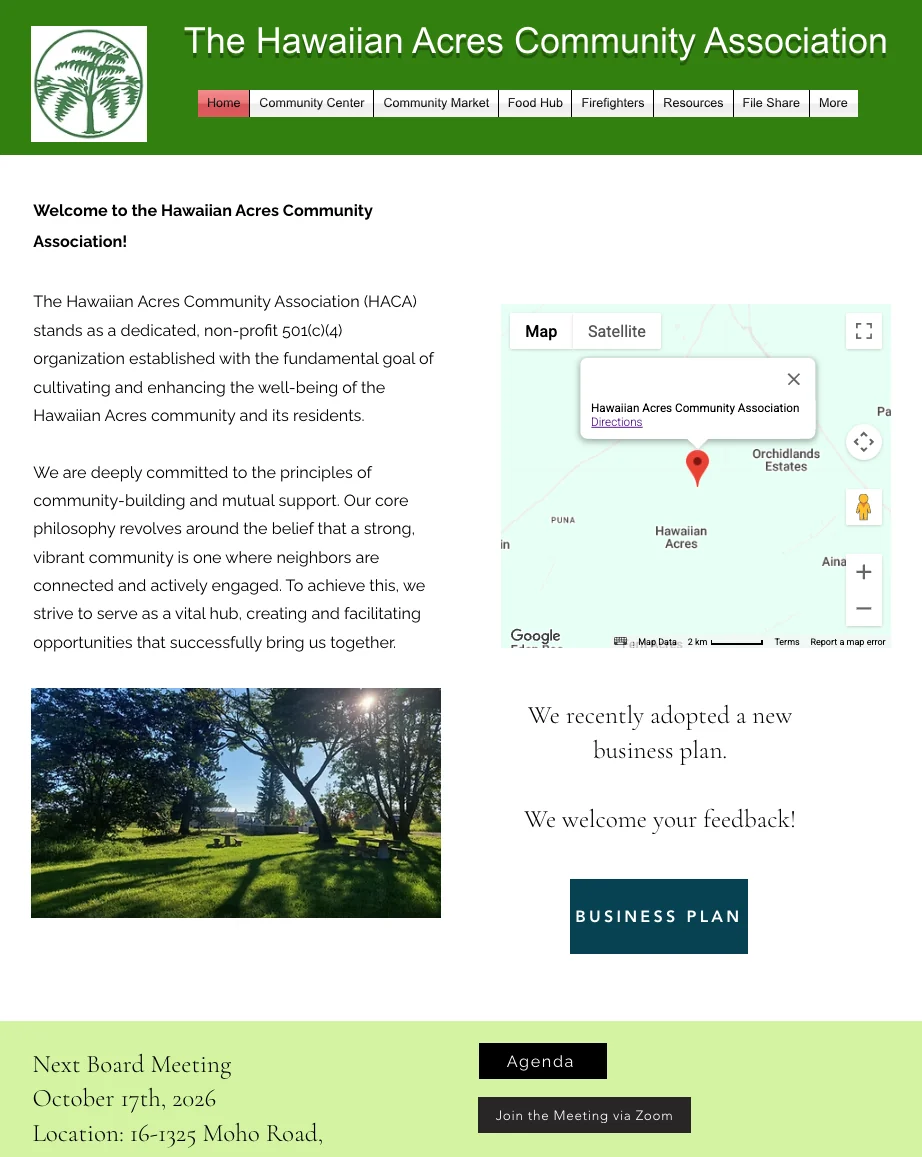
A volunteer board was paying $1,015.58 a year for a page-builder website, and spending its own time on three recurring jobs: keeping that site current, keeping membership and dues records up to date across several systems that disagreed, and documenting its meetings.
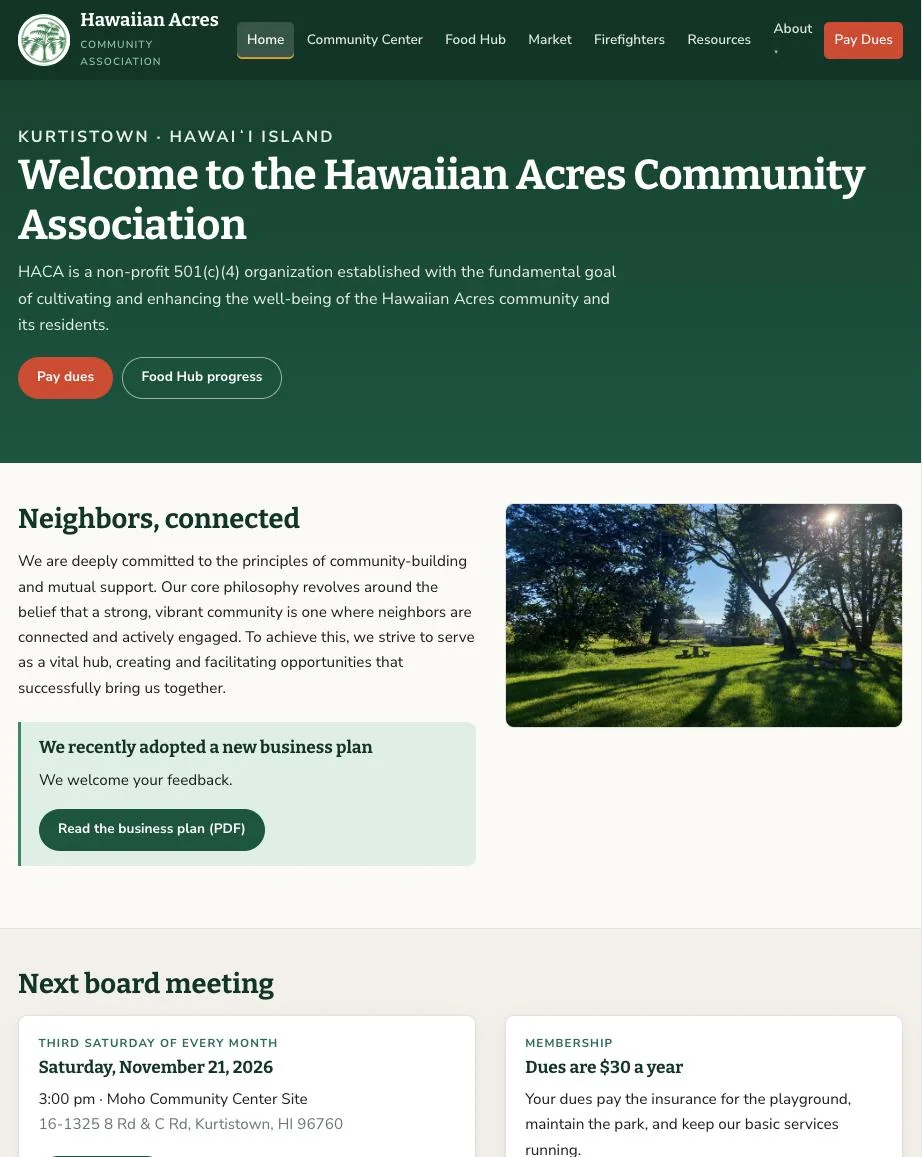
An integrated system designed around AI-driven workflows. The website was replaced and rebuilt on a single membership database, reconciled against county parcel records, with online dues, member sign-in, and membership notices that send themselves. Volunteers now describe a website change and approve a preview instead of editing pages; scanned property-transfer documents become proposed record updates that an officer approves in one pass; agendas and minutes publish themselves when dropped into a shared folder. One rule governs all of it: an assistant may propose, a person commits.
Live since October 2026. Annual cost fell from about $1,000 to about $340. Most of the savings came from replacing services the platform had bundled together; the page-builder budget became an AI subscription that does far more than edit pages, supporting volunteers with meeting minutes, association documents, and grant drafting.
OBSERVATORY · MOTION CONTROL SOFTWARE
The telescope’s Alignment and Phasing System has more than a dozen mechanisms (stages, wheels, a K-mirror) driven by Galil DMC-500x0 motion controllers. They needed a common, well-tested software layer that fits the observatory’s control framework and can be exercised long before the real instrument exists.
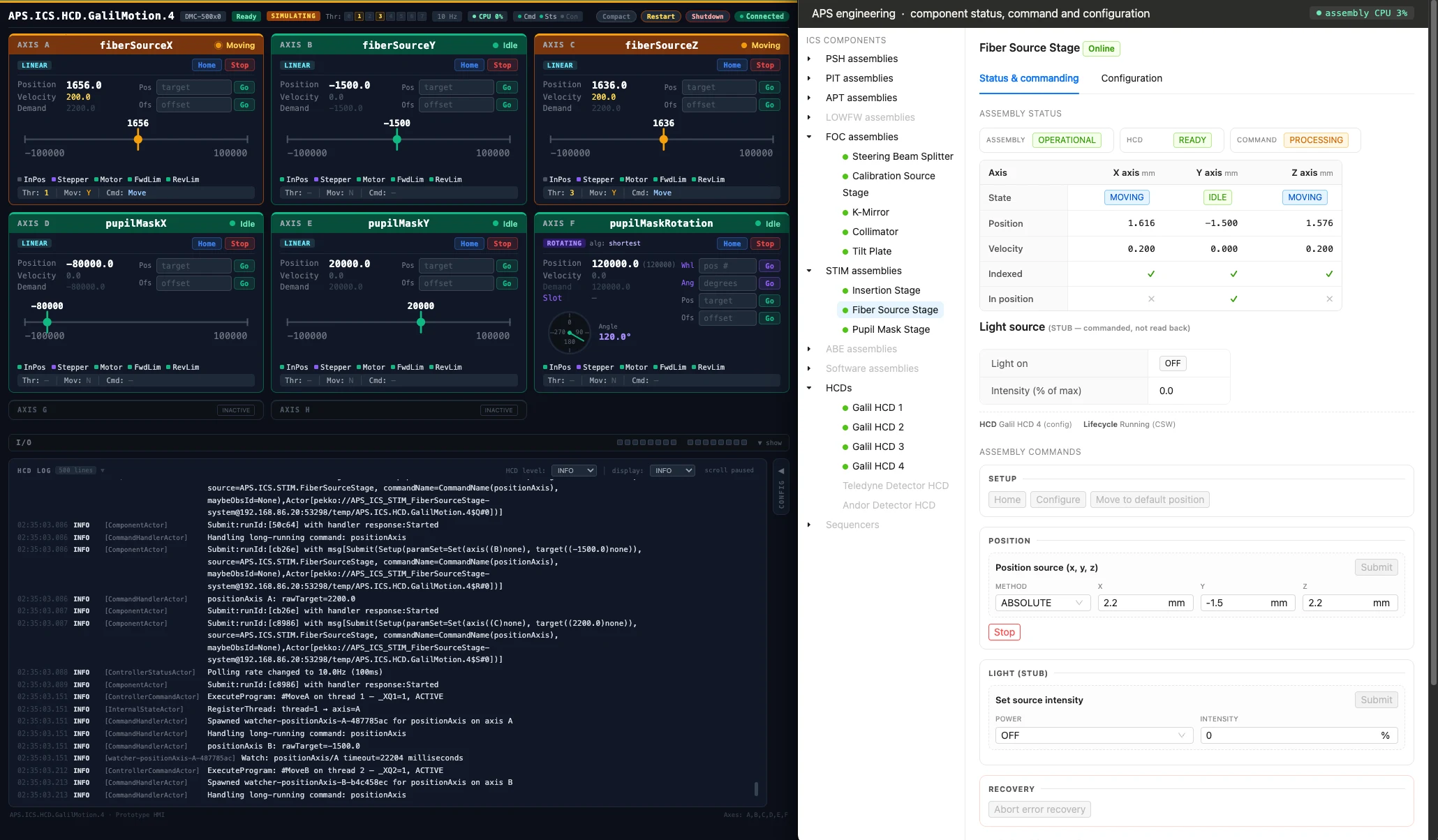
I designed and built the GalilMotion HCD, the hardware control daemon that owns the controller: connection management, command sequencing across axes, status polling, and a state model that reports each axis honestly to the layers above. It is written in Scala 3 on the observatory’s CSW framework, with a controller simulator so the full stack can run and be tested without hardware.
On top of the HCD sit sixteen instrument assemblies covering the stages, wheels, and K-mirror, each exposing its mechanism in the terms the instrument scientists use rather than in controller axes. A browser-based engineering interface lets operators exercise mechanisms and watch axis state in real time. The software was verified against a four-axis lab controller and the eight-axis Stimulus Test Bench.
This was an AI-assisted development effort from the start. I kept ownership of the architecture and every design decision, and used simulation, automated tests, detailed review, and hardware runs to judge the result. The process is documented for the observatory as part of the prototype report, and the story of how the working relationship was learned is told in Make me write it down, with a single-narrative technical companion, Read every word.
OTHER KINDS OF WORK
Connect equipment, coordinate motion, build operator interfaces, and improve visibility into system behavior.
Explore observatory systems →Reduce repetitive entry, connect existing tools, and move information smoothly between the steps in your process.
Explore business solutions →Explore ways to search information, assist with routine tasks, and turn business data into useful answers.
Explore AI & data →Build a focused application when off-the-shelf tools don’t match the way your team needs to work.
Discuss your project →